
eCommerce Strategy
Complete guide to building a Framer eCommerce store with Shopify in 2026
11 min read
A curated guide to the best Framer eCommerce templates for Shopify, including design quality, Framer Commerce compatibility, CMS structure, storefront pages, and ideal brand types.
Templates & Inspiration
14 min read
The Framer Marketplace has changed shape over the last year. What used to be a shallow pool of generic shop layouts is now a genuinely competitive category — with templates built for specific verticals, specific brand temperatures, and specific commerce stacks. For founders building a new DTC brand, or designers using a template as a structural foundation for client work, the question is no longer whether Framer can support a serious storefront. It's which template fits the brand you're trying to build.
This list is not ranked. There is no first place and no last. The templates below all sit at the top of the Marketplace for different reasons, and the right choice depends on your category, your budget, your aesthetic direction, and how much storytelling your product needs to do.
For each pick, we cover the brand archetype it's designed for, what it does well, where it falls short, and a direct link to the Framer Marketplace listing.
A good Framer eCommerce template in 2026 has to clear a higher bar than it did two years ago. The selection criteria for this list:
Design quality that holds up to scrutiny. Typography, spacing, motion, and layout cohesion — judged at the level of a brand site that costs $20,000+ to build custom.
Real Shopify integration. Either via Framer Commerce or Frameship — meaning a working cart, real product sync, and a checkout that actually processes orders. Not a static mockup with "shop" buttons that go nowhere.
Page depth. Homepage, collection, product detail, cart, account, about, and supporting pages — fully designed, not just stubbed in.
Mobile execution. Most commerce traffic is mobile. Templates that fall apart below the laptop breakpoint were excluded.
Clear use-case fit. A template that tries to do everything for everyone usually does nothing particularly well. The strongest templates have a clear opinion about who they're for.
All ten below clear that bar. They differ in price, vertical, and aesthetic — and that's the point.
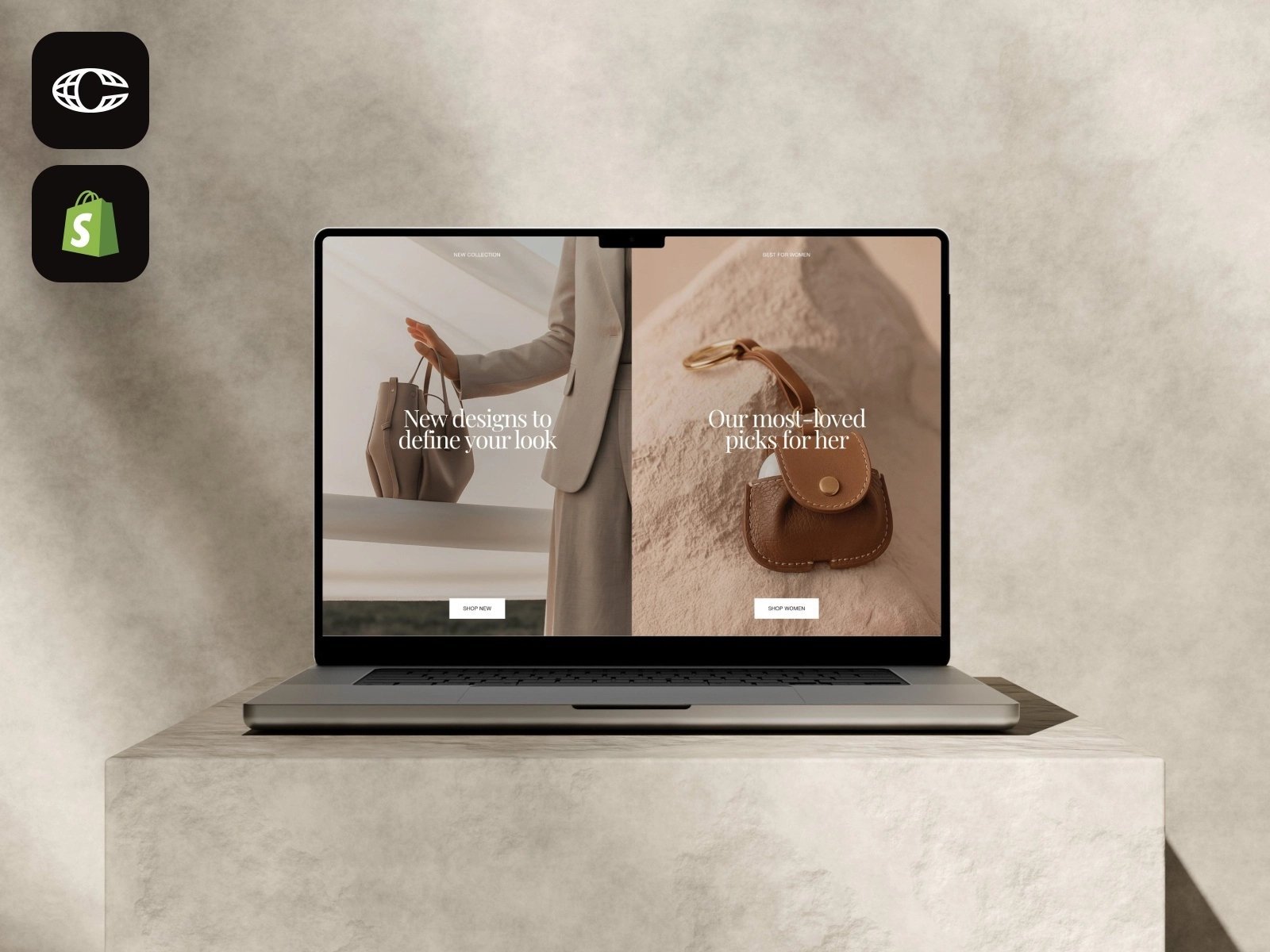
Best for: Premium fashion and lifestyle brands that want a clean, conversion-first storefront with restrained editorial polish.
Mesco is built around modern fashion merchandising. The product cards are calibrated for fashion photography aspect ratios. The collection page filtering is clean and quick. The cart drawer feels like something out of a $50,000 custom build — quantity controls, variant chips, upsells, all native and snappy.
It includes 17 fully designed pages and three CMS collections, with Shopify integration via Framer Commerce. The favorites/wishlist functionality is genuinely useful for fashion brands where customers browse multiple times before purchasing.
Where it's strongest: brands with strong product photography that want the imagery to lead. Where it's less ideal: brands with limited photography assets or single-SKU products.
Marketplace link: https://www.framer.com/marketplace/templates/mesco/
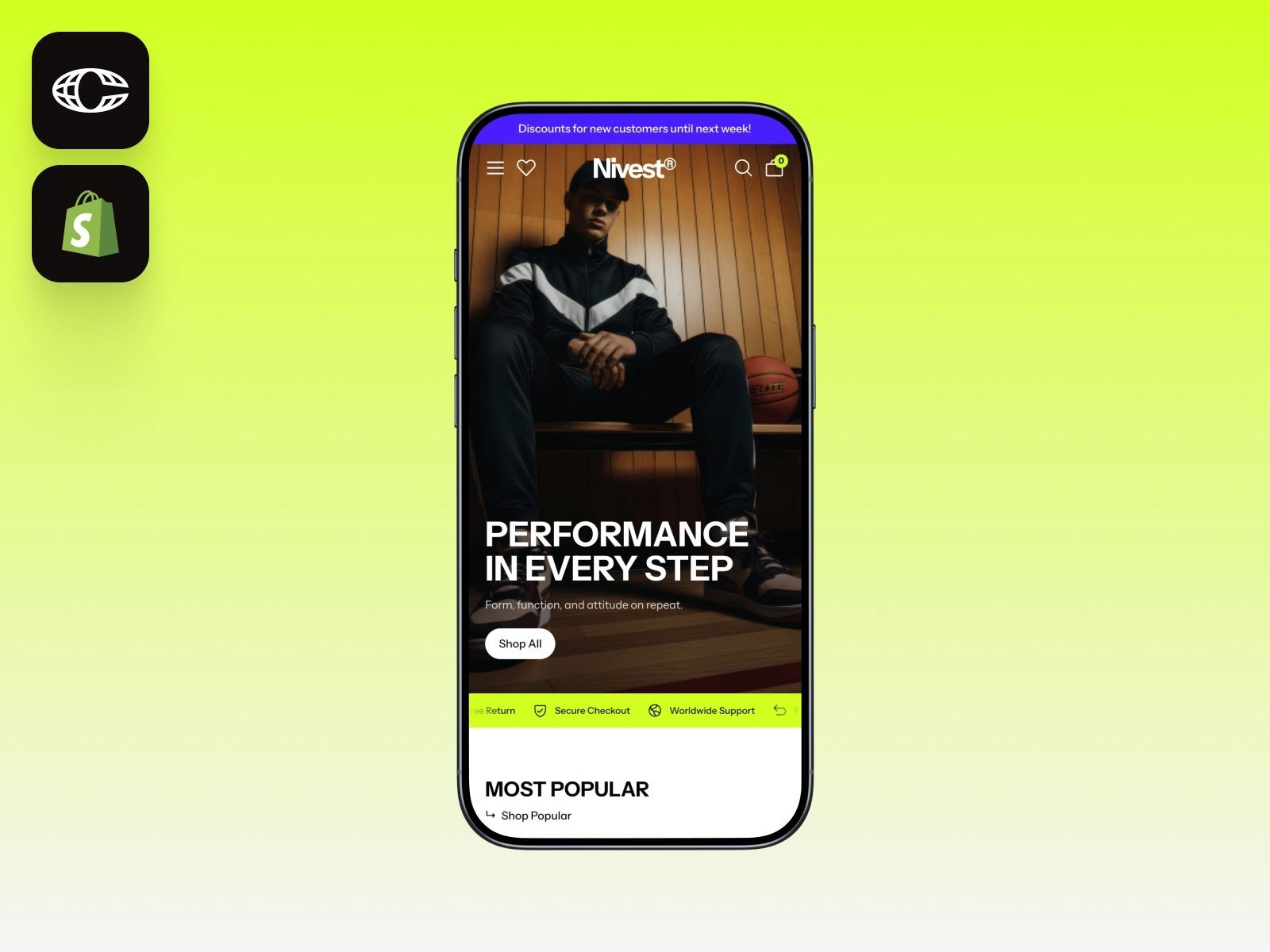
Best for: Streetwear, fashion-forward, and culture-driven brands that want a storefront that feels editorial — closer to a magazine than a catalog.
Nivest leans bold. Large typography, asymmetric layouts, generous whitespace, and a confident point of view. It's not for every brand — but for the brands it fits, nothing else on the Marketplace comes close in attitude. Streetwear labels, contemporary fashion drops, and culture-aligned product brands will find their visual language already half-built here.
Free to use, with the same Framer Commerce backbone as the paid Framlix templates. The free price point is unusual at this design quality and worth taking advantage of for the right brand.
Where it's strongest: brands that compete on attitude as much as product. Where it's less ideal: minimalist or quiet-luxury aesthetics — the template's voice is too loud for those.
Marketplace link: https://www.framer.com/marketplace/templates/nivest/
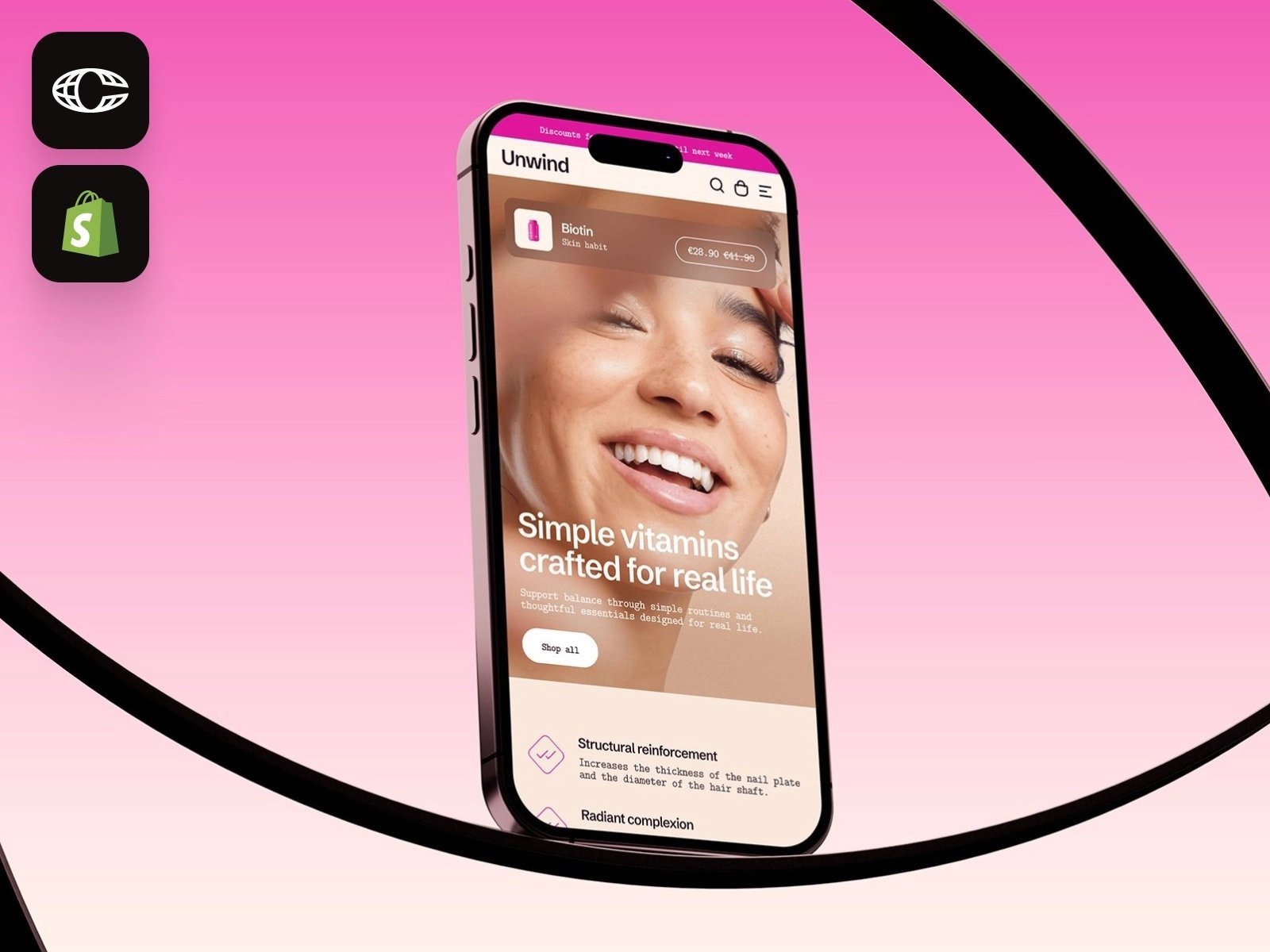
Best for: Wellness, supplements, and self-care lifestyle brands.
Unwind is one of the more thoughtful templates on the Marketplace for the wellness category. It avoids the two traps most wellness templates fall into: looking too clinical (like a pharmacy) or too generic (like every other "natural" brand).
The product detail page is the standout — it's structured to support the kind of education and storytelling wellness products need: ingredient breakdowns, usage rituals, benefits hierarchy, and trust signals. Mobile-first throughout, which matters more for wellness than for most categories given how much of this audience shops on phone during evening routines.
13 designed pages, three CMS collections, full Framer Commerce integration. At $129, it sits at the higher end of the Framlix lineup, justified by the depth of the product page system.
Marketplace link: https://www.framer.com/marketplace/templates/unwnd/
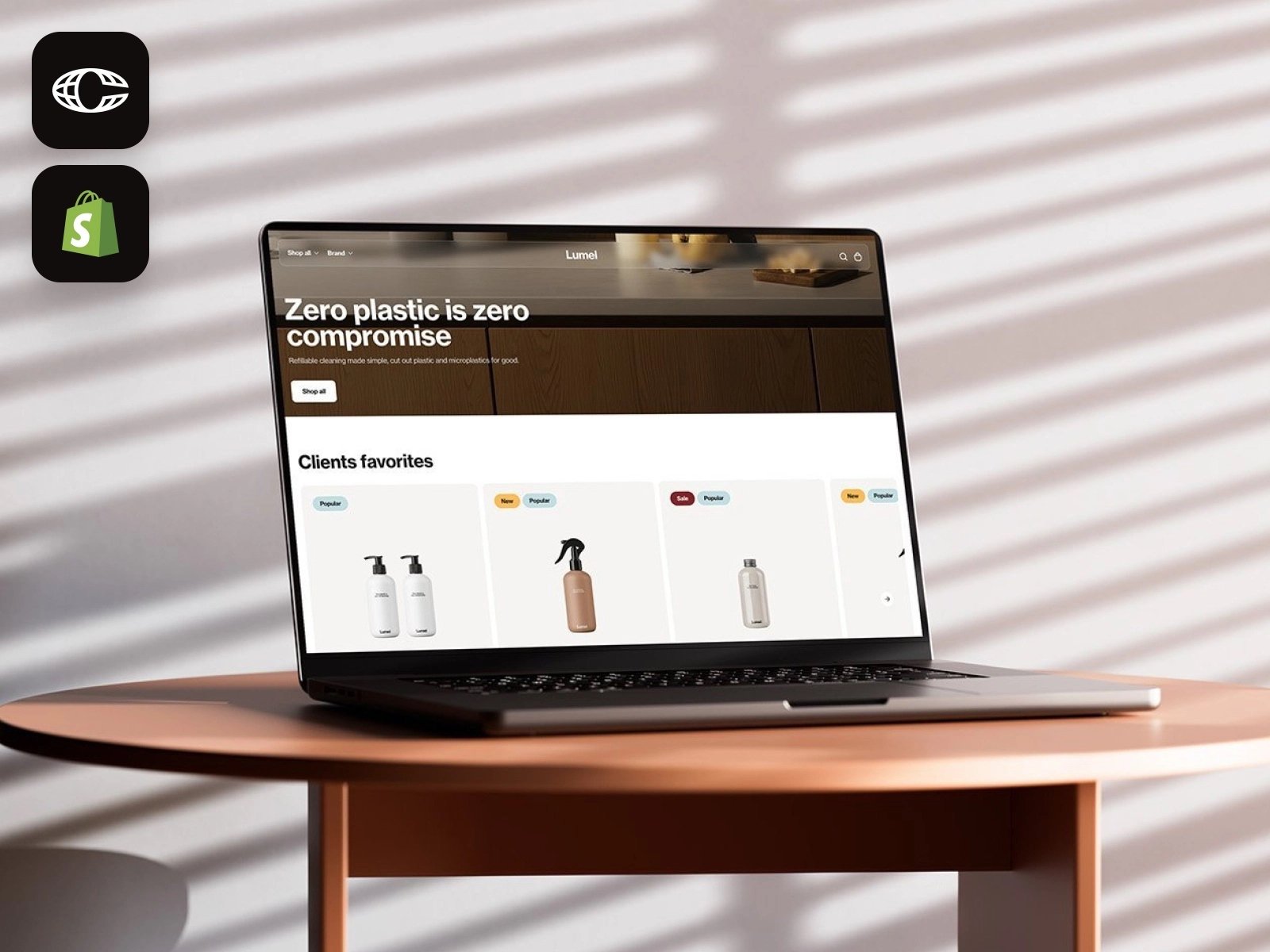
Best for: Sustainable, refill, and mission-driven lifestyle brands.
Lumel is the rare template that takes "sustainable brand" beyond a beige color palette. It's built around impact storytelling — sections for mission, sourcing, certifications, and refill mechanics — without sacrificing commerce conversion. For brands where the why matters as much as the what, this is one of the strongest options available.
15 fully designed pages, dedicated mission and impact pages, and a product detail layout that handles bundle and subscription configurations cleanly. The aesthetic is restrained without being austere — closer to a thoughtful editorial brand than an eco-cliché.
Where it's strongest: brands with a clear ethical or sustainability narrative. Where it's less ideal: brands that don't have substantive impact content to fill out the dedicated sections — they'll feel hollow.
Marketplace link: https://www.framer.com/marketplace/templates/lumel/
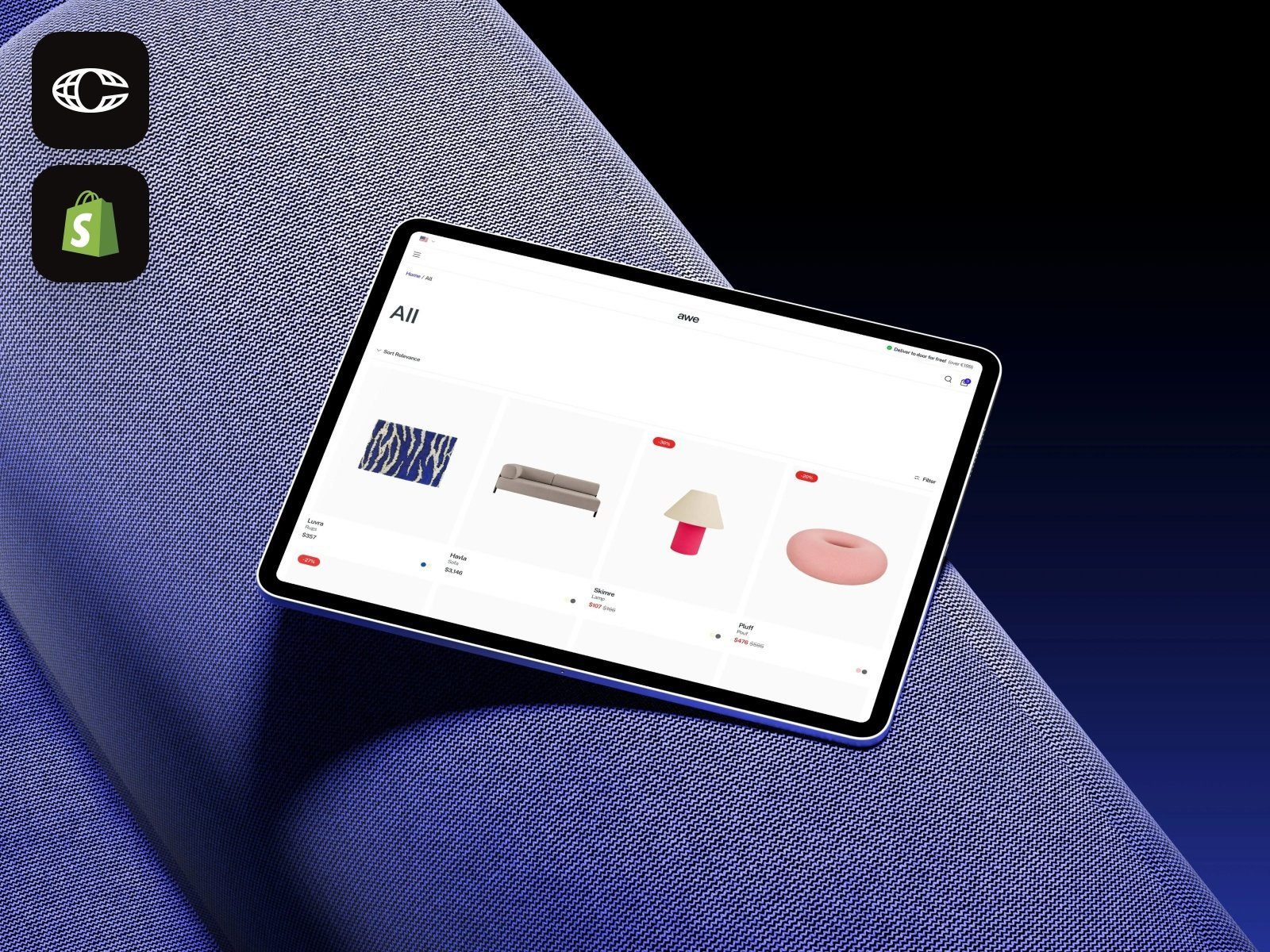
Best for: Furniture, home goods, and high-end lifestyle brands with Scandinavian or design-forward sensibilities.
Awe is built for a specific aesthetic vocabulary — the timeless, functional, design-as-craft direction that defines a lot of contemporary furniture and home brands. Think the kind of brand whose Instagram is mostly product styled in natural light, with copy that reads like a design manifesto.
It includes 15 designed pages and four CMS collections — the additional collection compared to most templates supports designer/maker bios, which is a meaningful differentiator for furniture brands that lead with craft. Product photography displays at large scale across the page templates, which suits this category well.
Marketplace link: https://www.framer.com/marketplace/templates/awe/
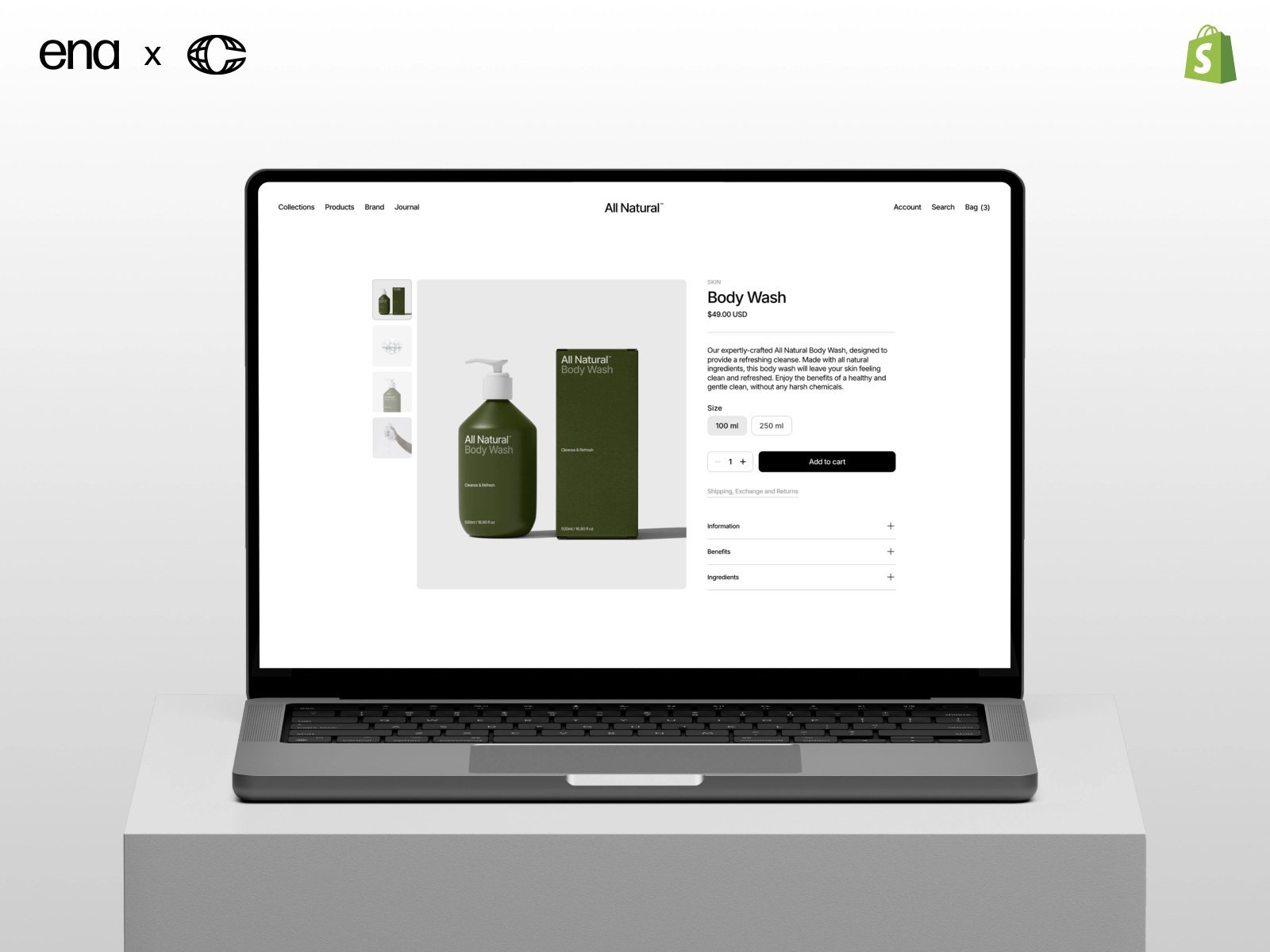
Best for: Organic, food, beverage, and natural-positioned consumer brands.
All Natural takes a softer, more handcrafted approach than most templates on this list. The aesthetic skews warm — earthy palette, organic shapes, illustrative accents — which makes it a strong fit for natural food, beverage, and pantry brands that want to communicate craft and authenticity rather than industrial polish.
Built with Framer + Shopify integration, with native filtering and a clean collection structure. The template is opinionated about its visual direction, which is a strength for brands whose identity already aligns with that direction and a constraint for brands that don't.
Marketplace link: https://www.framer.com/marketplace/templates/all-natural/
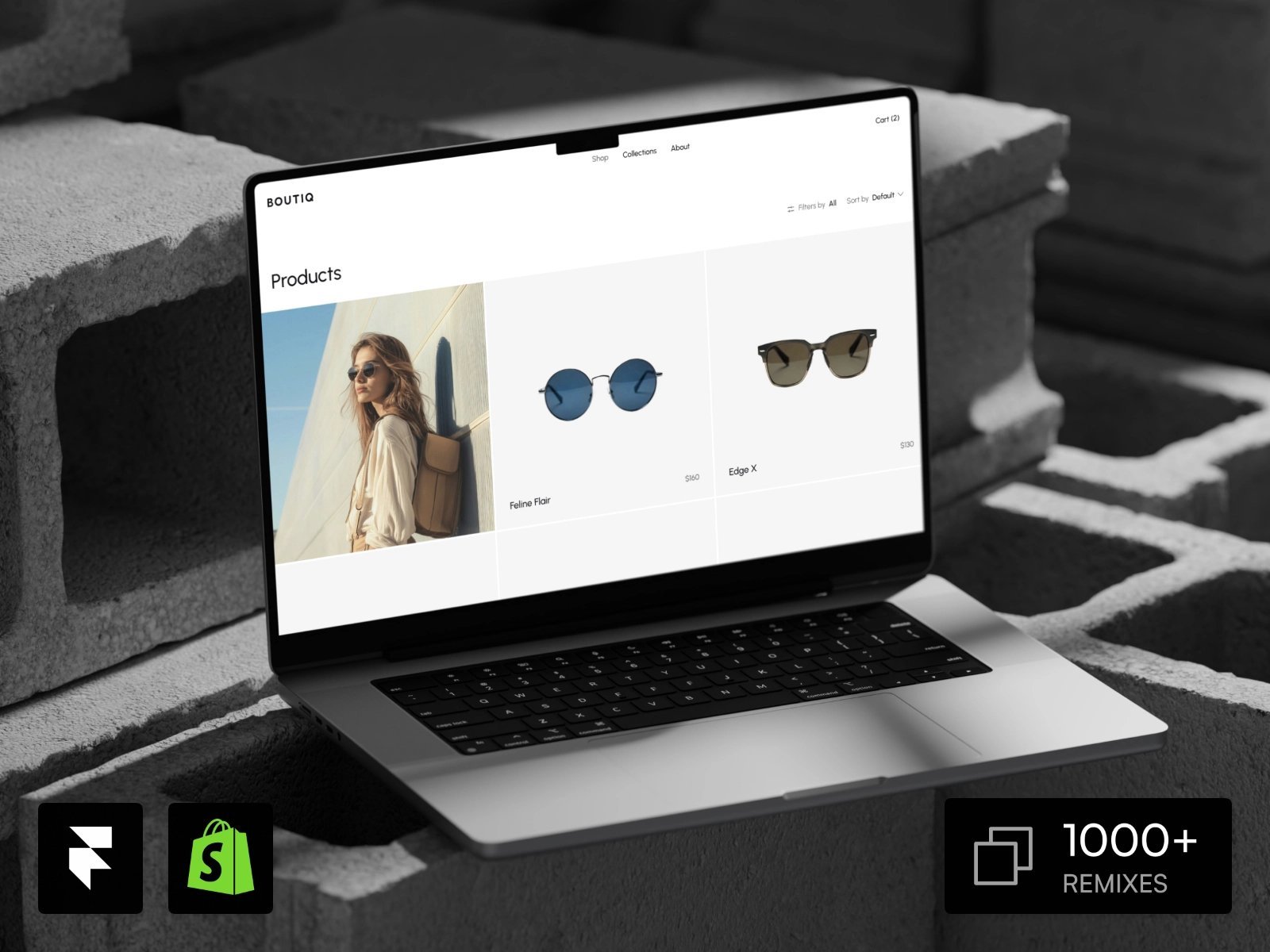
Best for: Small fashion shops, artisan product brands, and minimalist boutiques.
Boutiq lives at the intersection of minimal and editorial. The layout is restrained — heavy whitespace, careful typography, focused product hero sections — and the scroll flow is genuinely well-designed, guiding visitors from intro through to checkout without friction. Powered by Frameship for Shopify integration rather than Framer Commerce, which is worth noting for stack consistency.
15 page types, four CMS collections (products, journal, team, FAQ), and a journal section that supports content marketing — useful for brands trying to rank for category-related search terms over time.
At $129 with the included Frameship discount, the total cost of ownership lands close to comparable Framer Commerce templates.
Marketplace link: https://www.framer.com/marketplace/templates/boutiq/
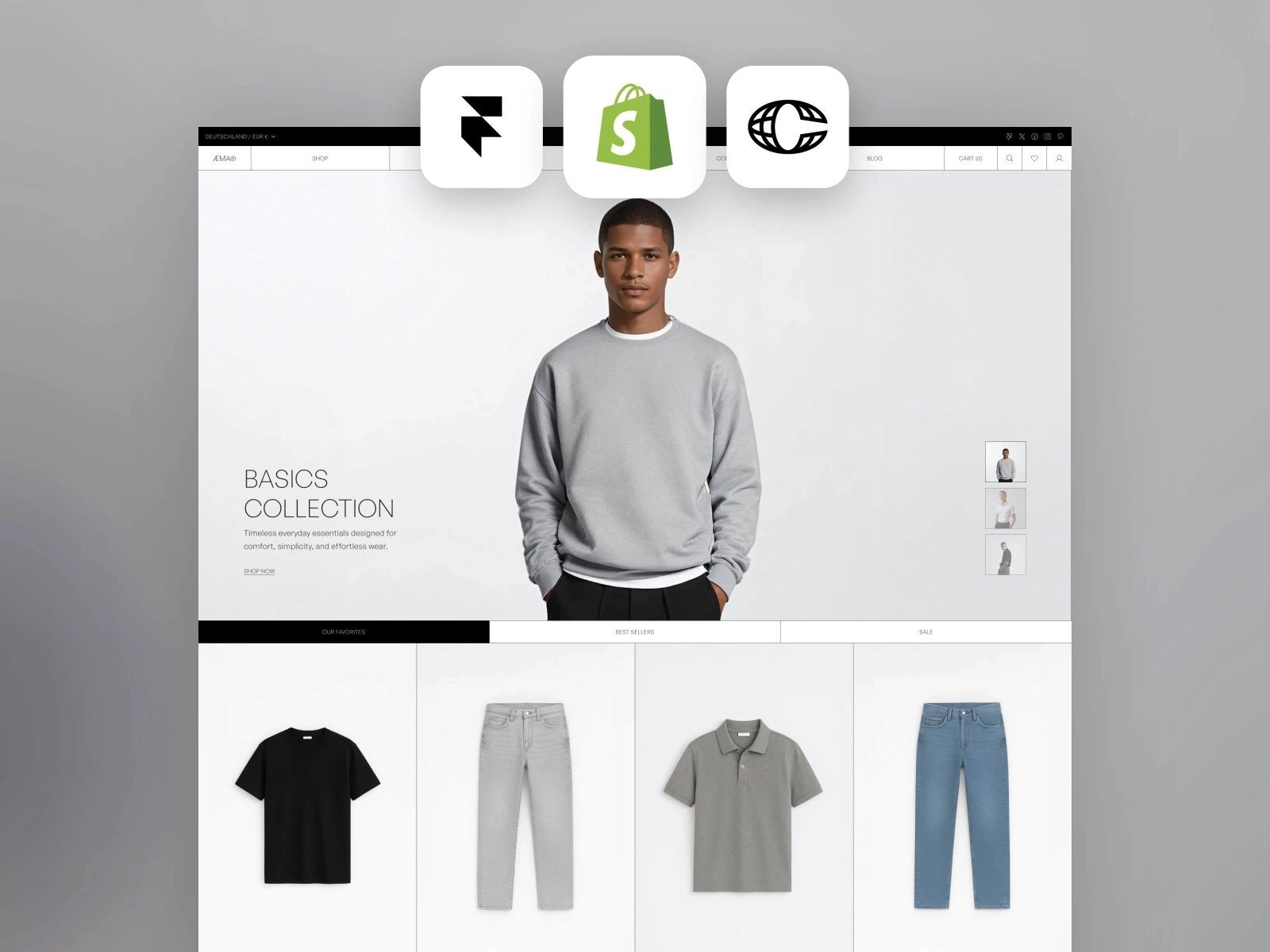
Best for: Beauty, cosmetics, and minimal lifestyle brands.
Aema's approach is studied minimalism — generous spacing, soft type, photography-led product cards, and a quiet color story. It works particularly well for beauty and cosmetics brands that want their product packaging to be the visual lead, not template chrome.
Built on Framer Commerce with full Shopify integration, fully responsive, and component-based for easy customization. At $99, it's priced competitively against the higher tier of fashion-focused templates while delivering a category-specific aesthetic that those templates don't.
Where it's strongest: minimal beauty brands with strong product packaging. Where it's less ideal: bold or experimental brands — the template's restraint becomes a constraint.
Marketplace link: https://www.framer.com/marketplace/templates/aema/
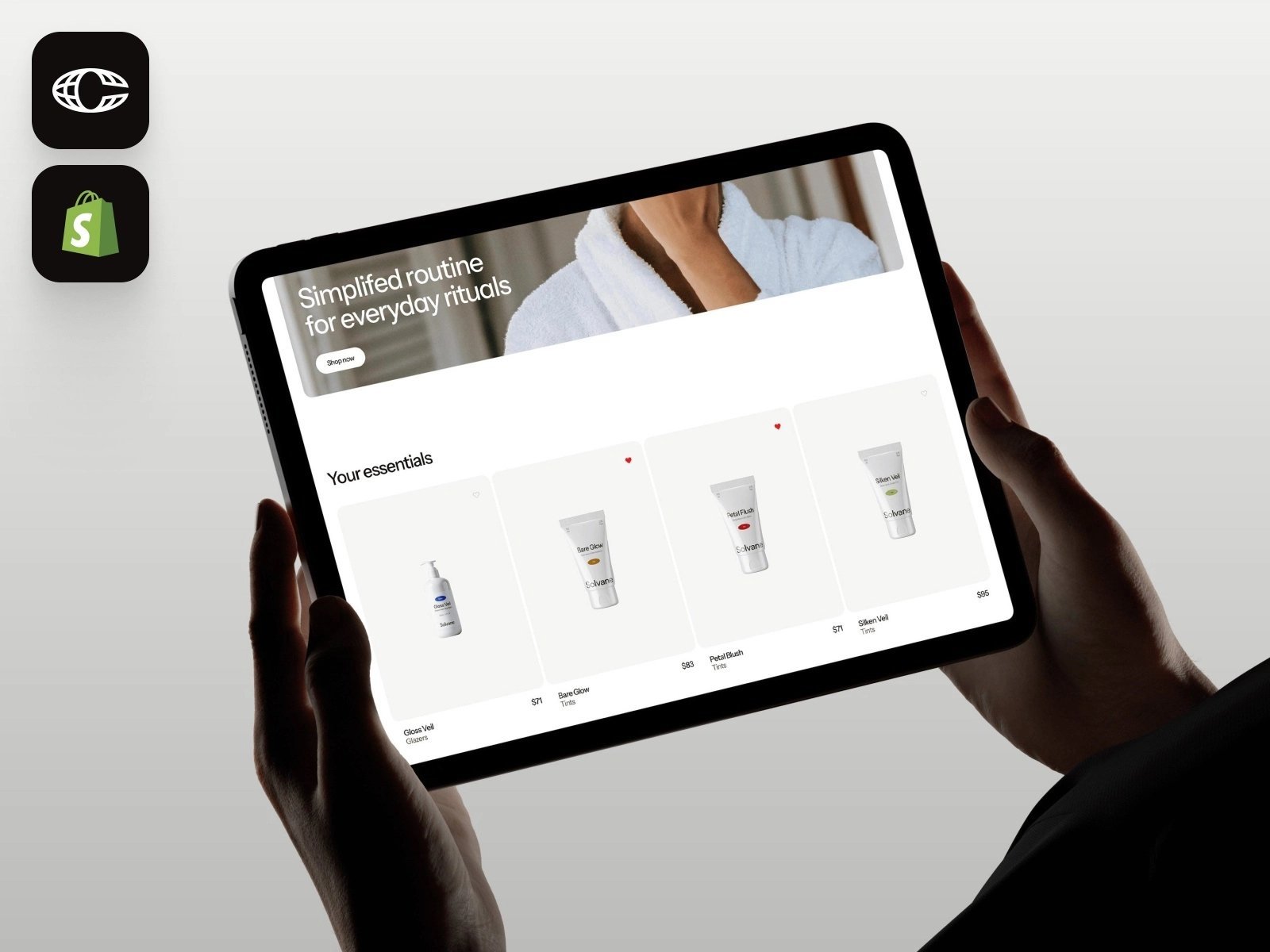
Best for: Skincare, beauty, and wellness brands.
Solvane sits in similar territory to Unwind and Aema, but with a distinct identity — slightly more clinical than Unwind, slightly more substantive than Aema. The product detail pages handle ingredient lists, claim hierarchies, and routine sequencing well, which matters for skincare specifically.
15 designed pages, three CMS collections, and the standard Framer Commerce + Shopify stack. Strong on filtering and sorting for brands with broader catalogs (serums, cleansers, moisturizers across multiple skin concerns).
For DTC skincare brands evaluating Framer for the first time, this is one of the more direct on-ramps available.
Marketplace link: https://www.framer.com/marketplace/templates/solvane/
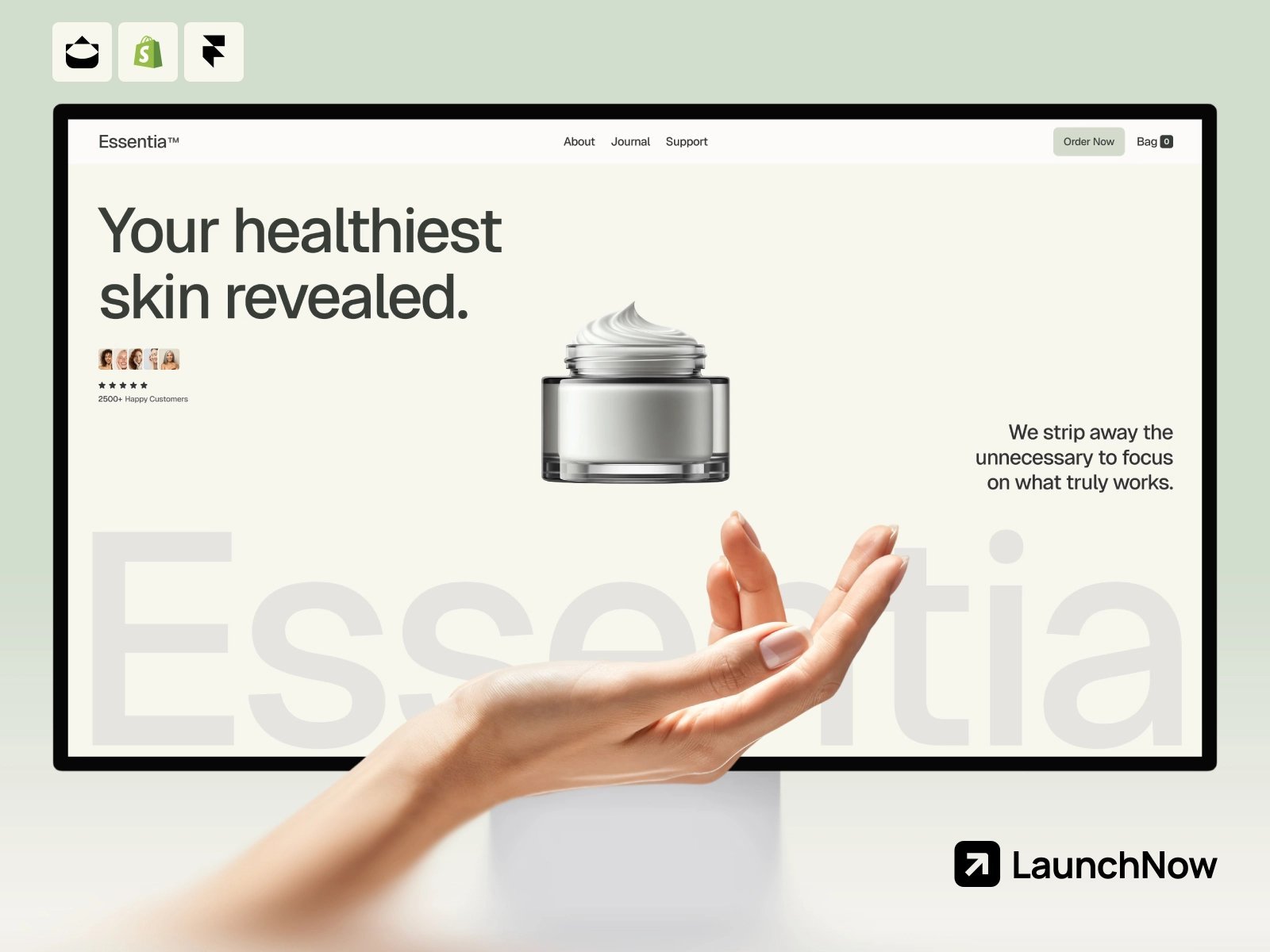
Best for: Single-product brands launching a hero SKU.
Essentia is structurally different from the others on this list. It's built specifically for one-product stores — the kind of brand where everything funnels toward purchasing a single hero item. That focus is the template's strength: the page architecture is built around storytelling, demonstration, and conversion in a sequential flow rather than a multi-product browsing experience.
If your brand is a single supplement, a single piece of hardware, a single piece of furniture — anything where you're not asking customers to choose between options but to commit to one product — this is the most purpose-built template on the Marketplace for that scenario. Powered by Frameship for the Shopify integration layer.
Where it's strongest: focused single-product launches. Where it's less ideal: multi-SKU catalogs — the architecture isn't designed for browsing.
Marketplace link: https://www.framer.com/marketplace/templates/essentia/
The mistake most founders make at this stage is starting with the template they like the look of and trying to fit their brand into it. The better approach is the reverse: define your brand's visual direction first, then pick the template whose default aesthetic gets you 80% of the way there.
A few practical filters:
Single product or multi-SKU? Essentia is built for the former; everything else assumes a catalog.
Editorial or restrained? Nivest leans bold and editorial. Aema, Awe, and Solvane lean quiet and refined. Mesco and Unwind sit in the middle.
Vertical specificity: If you're in skincare, Solvane and Unwind are designed for you. Furniture, Awe. Streetwear, Nivest. Single product, Essentia. Forcing a fashion template onto a wellness brand creates more work than starting with a vertical-aligned template.
Budget: Free options (Nivest) genuinely compete with paid ones at the design quality level. The paid templates differ more in vertical fit than in fundamental quality.
Stack consistency: Most templates here use Framer Commerce. Boutiq and Essentia use Frameship. Both work; just commit to one stack rather than mixing.
If you're a designer or studio using one of these templates as the starting point for client work, a few notes worth flagging:
Templates with cleaner component architecture are faster to customize. Mesco, Nivest, Lumel, Awe, Solvane, and Unwind all share the Framlix component system, which is genuinely modular — variants, instances, and tokens are set up properly. That saves significant time when reskinning for a client brand.
CMS structure matters more than aesthetics for handover. A template's CMS schema becomes your client's daily working environment. Templates with clearly named, well-structured CMS collections will save your client (and you, on the support questions that follow) hours of confusion.
Plugin lock-in is real. Choosing between Framer Commerce and Frameship affects not just the template purchase but the client's ongoing licensing. Decide on the stack before pitching the template to the client.
Whichever direction you go, the Framer Marketplace in 2026 has more genuinely strong eCommerce options than at any point before. The hard part isn't finding a good template anymore — it's matching the right one to the right brand.
The Framer Marketplace has changed shape over the last year. What used to be a shallow pool of generic shop layouts is now a genuinely competitive category — with templates built for specific verticals, specific brand temperatures, and specific commerce stacks. For founders building a new DTC brand, or designers using a template as a structural foundation for client work, the question is no longer whether Framer can support a serious storefront. It's which template fits the brand you're trying to build.
This list is not ranked. There is no first place and no last. The templates below all sit at the top of the Marketplace for different reasons, and the right choice depends on your category, your budget, your aesthetic direction, and how much storytelling your product needs to do.
For each pick, we cover the brand archetype it's designed for, what it does well, where it falls short, and a direct link to the Framer Marketplace listing.
A good Framer eCommerce template in 2026 has to clear a higher bar than it did two years ago. The selection criteria for this list:
Design quality that holds up to scrutiny. Typography, spacing, motion, and layout cohesion — judged at the level of a brand site that costs $20,000+ to build custom.
Real Shopify integration. Either via Framer Commerce or Frameship — meaning a working cart, real product sync, and a checkout that actually processes orders. Not a static mockup with "shop" buttons that go nowhere.
Page depth. Homepage, collection, product detail, cart, account, about, and supporting pages — fully designed, not just stubbed in.
Mobile execution. Most commerce traffic is mobile. Templates that fall apart below the laptop breakpoint were excluded.
Clear use-case fit. A template that tries to do everything for everyone usually does nothing particularly well. The strongest templates have a clear opinion about who they're for.
All ten below clear that bar. They differ in price, vertical, and aesthetic — and that's the point.
Best for: Premium fashion and lifestyle brands that want a clean, conversion-first storefront with restrained editorial polish.
Mesco is built around modern fashion merchandising. The product cards are calibrated for fashion photography aspect ratios. The collection page filtering is clean and quick. The cart drawer feels like something out of a $50,000 custom build — quantity controls, variant chips, upsells, all native and snappy.
It includes 17 fully designed pages and three CMS collections, with Shopify integration via Framer Commerce. The favorites/wishlist functionality is genuinely useful for fashion brands where customers browse multiple times before purchasing.
Where it's strongest: brands with strong product photography that want the imagery to lead. Where it's less ideal: brands with limited photography assets or single-SKU products.
Marketplace link: https://www.framer.com/marketplace/templates/mesco/
Best for: Streetwear, fashion-forward, and culture-driven brands that want a storefront that feels editorial — closer to a magazine than a catalog.
Nivest leans bold. Large typography, asymmetric layouts, generous whitespace, and a confident point of view. It's not for every brand — but for the brands it fits, nothing else on the Marketplace comes close in attitude. Streetwear labels, contemporary fashion drops, and culture-aligned product brands will find their visual language already half-built here.
Free to use, with the same Framer Commerce backbone as the paid Framlix templates. The free price point is unusual at this design quality and worth taking advantage of for the right brand.
Where it's strongest: brands that compete on attitude as much as product. Where it's less ideal: minimalist or quiet-luxury aesthetics — the template's voice is too loud for those.
Marketplace link: https://www.framer.com/marketplace/templates/nivest/
Best for: Wellness, supplements, and self-care lifestyle brands.
Unwind is one of the more thoughtful templates on the Marketplace for the wellness category. It avoids the two traps most wellness templates fall into: looking too clinical (like a pharmacy) or too generic (like every other "natural" brand).
The product detail page is the standout — it's structured to support the kind of education and storytelling wellness products need: ingredient breakdowns, usage rituals, benefits hierarchy, and trust signals. Mobile-first throughout, which matters more for wellness than for most categories given how much of this audience shops on phone during evening routines.
13 designed pages, three CMS collections, full Framer Commerce integration. At $129, it sits at the higher end of the Framlix lineup, justified by the depth of the product page system.
Marketplace link: https://www.framer.com/marketplace/templates/unwnd/
Best for: Sustainable, refill, and mission-driven lifestyle brands.
Lumel is the rare template that takes "sustainable brand" beyond a beige color palette. It's built around impact storytelling — sections for mission, sourcing, certifications, and refill mechanics — without sacrificing commerce conversion. For brands where the why matters as much as the what, this is one of the strongest options available.
15 fully designed pages, dedicated mission and impact pages, and a product detail layout that handles bundle and subscription configurations cleanly. The aesthetic is restrained without being austere — closer to a thoughtful editorial brand than an eco-cliché.
Where it's strongest: brands with a clear ethical or sustainability narrative. Where it's less ideal: brands that don't have substantive impact content to fill out the dedicated sections — they'll feel hollow.
Marketplace link: https://www.framer.com/marketplace/templates/lumel/
Best for: Furniture, home goods, and high-end lifestyle brands with Scandinavian or design-forward sensibilities.
Awe is built for a specific aesthetic vocabulary — the timeless, functional, design-as-craft direction that defines a lot of contemporary furniture and home brands. Think the kind of brand whose Instagram is mostly product styled in natural light, with copy that reads like a design manifesto.
It includes 15 designed pages and four CMS collections — the additional collection compared to most templates supports designer/maker bios, which is a meaningful differentiator for furniture brands that lead with craft. Product photography displays at large scale across the page templates, which suits this category well.
Marketplace link: https://www.framer.com/marketplace/templates/awe/
Best for: Organic, food, beverage, and natural-positioned consumer brands.
All Natural takes a softer, more handcrafted approach than most templates on this list. The aesthetic skews warm — earthy palette, organic shapes, illustrative accents — which makes it a strong fit for natural food, beverage, and pantry brands that want to communicate craft and authenticity rather than industrial polish.
Built with Framer + Shopify integration, with native filtering and a clean collection structure. The template is opinionated about its visual direction, which is a strength for brands whose identity already aligns with that direction and a constraint for brands that don't.
Marketplace link: https://www.framer.com/marketplace/templates/all-natural/
Best for: Small fashion shops, artisan product brands, and minimalist boutiques.
Boutiq lives at the intersection of minimal and editorial. The layout is restrained — heavy whitespace, careful typography, focused product hero sections — and the scroll flow is genuinely well-designed, guiding visitors from intro through to checkout without friction. Powered by Frameship for Shopify integration rather than Framer Commerce, which is worth noting for stack consistency.
15 page types, four CMS collections (products, journal, team, FAQ), and a journal section that supports content marketing — useful for brands trying to rank for category-related search terms over time.
At $129 with the included Frameship discount, the total cost of ownership lands close to comparable Framer Commerce templates.
Marketplace link: https://www.framer.com/marketplace/templates/boutiq/
Best for: Beauty, cosmetics, and minimal lifestyle brands.
Aema's approach is studied minimalism — generous spacing, soft type, photography-led product cards, and a quiet color story. It works particularly well for beauty and cosmetics brands that want their product packaging to be the visual lead, not template chrome.
Built on Framer Commerce with full Shopify integration, fully responsive, and component-based for easy customization. At $99, it's priced competitively against the higher tier of fashion-focused templates while delivering a category-specific aesthetic that those templates don't.
Where it's strongest: minimal beauty brands with strong product packaging. Where it's less ideal: bold or experimental brands — the template's restraint becomes a constraint.
Marketplace link: https://www.framer.com/marketplace/templates/aema/
Best for: Skincare, beauty, and wellness brands.
Solvane sits in similar territory to Unwind and Aema, but with a distinct identity — slightly more clinical than Unwind, slightly more substantive than Aema. The product detail pages handle ingredient lists, claim hierarchies, and routine sequencing well, which matters for skincare specifically.
15 designed pages, three CMS collections, and the standard Framer Commerce + Shopify stack. Strong on filtering and sorting for brands with broader catalogs (serums, cleansers, moisturizers across multiple skin concerns).
For DTC skincare brands evaluating Framer for the first time, this is one of the more direct on-ramps available.
Marketplace link: https://www.framer.com/marketplace/templates/solvane/
Best for: Single-product brands launching a hero SKU.
Essentia is structurally different from the others on this list. It's built specifically for one-product stores — the kind of brand where everything funnels toward purchasing a single hero item. That focus is the template's strength: the page architecture is built around storytelling, demonstration, and conversion in a sequential flow rather than a multi-product browsing experience.
If your brand is a single supplement, a single piece of hardware, a single piece of furniture — anything where you're not asking customers to choose between options but to commit to one product — this is the most purpose-built template on the Marketplace for that scenario. Powered by Frameship for the Shopify integration layer.
Where it's strongest: focused single-product launches. Where it's less ideal: multi-SKU catalogs — the architecture isn't designed for browsing.
Marketplace link: https://www.framer.com/marketplace/templates/essentia/
The mistake most founders make at this stage is starting with the template they like the look of and trying to fit their brand into it. The better approach is the reverse: define your brand's visual direction first, then pick the template whose default aesthetic gets you 80% of the way there.
A few practical filters:
Single product or multi-SKU? Essentia is built for the former; everything else assumes a catalog.
Editorial or restrained? Nivest leans bold and editorial. Aema, Awe, and Solvane lean quiet and refined. Mesco and Unwind sit in the middle.
Vertical specificity: If you're in skincare, Solvane and Unwind are designed for you. Furniture, Awe. Streetwear, Nivest. Single product, Essentia. Forcing a fashion template onto a wellness brand creates more work than starting with a vertical-aligned template.
Budget: Free options (Nivest) genuinely compete with paid ones at the design quality level. The paid templates differ more in vertical fit than in fundamental quality.
Stack consistency: Most templates here use Framer Commerce. Boutiq and Essentia use Frameship. Both work; just commit to one stack rather than mixing.
If you're a designer or studio using one of these templates as the starting point for client work, a few notes worth flagging:
Templates with cleaner component architecture are faster to customize. Mesco, Nivest, Lumel, Awe, Solvane, and Unwind all share the Framlix component system, which is genuinely modular — variants, instances, and tokens are set up properly. That saves significant time when reskinning for a client brand.
CMS structure matters more than aesthetics for handover. A template's CMS schema becomes your client's daily working environment. Templates with clearly named, well-structured CMS collections will save your client (and you, on the support questions that follow) hours of confusion.
Plugin lock-in is real. Choosing between Framer Commerce and Frameship affects not just the template purchase but the client's ongoing licensing. Decide on the stack before pitching the template to the client.
Whichever direction you go, the Framer Marketplace in 2026 has more genuinely strong eCommerce options than at any point before. The hard part isn't finding a good template anymore — it's matching the right one to the right brand.

No code required
No code required
Best eCommerce templates
Best eCommerce templates
Fast and direct help
Fast and direct help

Creator of Framlix
Digital designer with 4+ years of experience in branding, web, and UI. Former London design studio. Now at Framer Commerce — and building Framlix, high-quality Framer e-commerce templates with native Shopify integration.
All articles
eCommerce Strategy
11 min read
Shopify & Platform
10 min read
Tools & Reviews
11 min read
Tutorials & How-To
12 min read